


Daily Roundup:
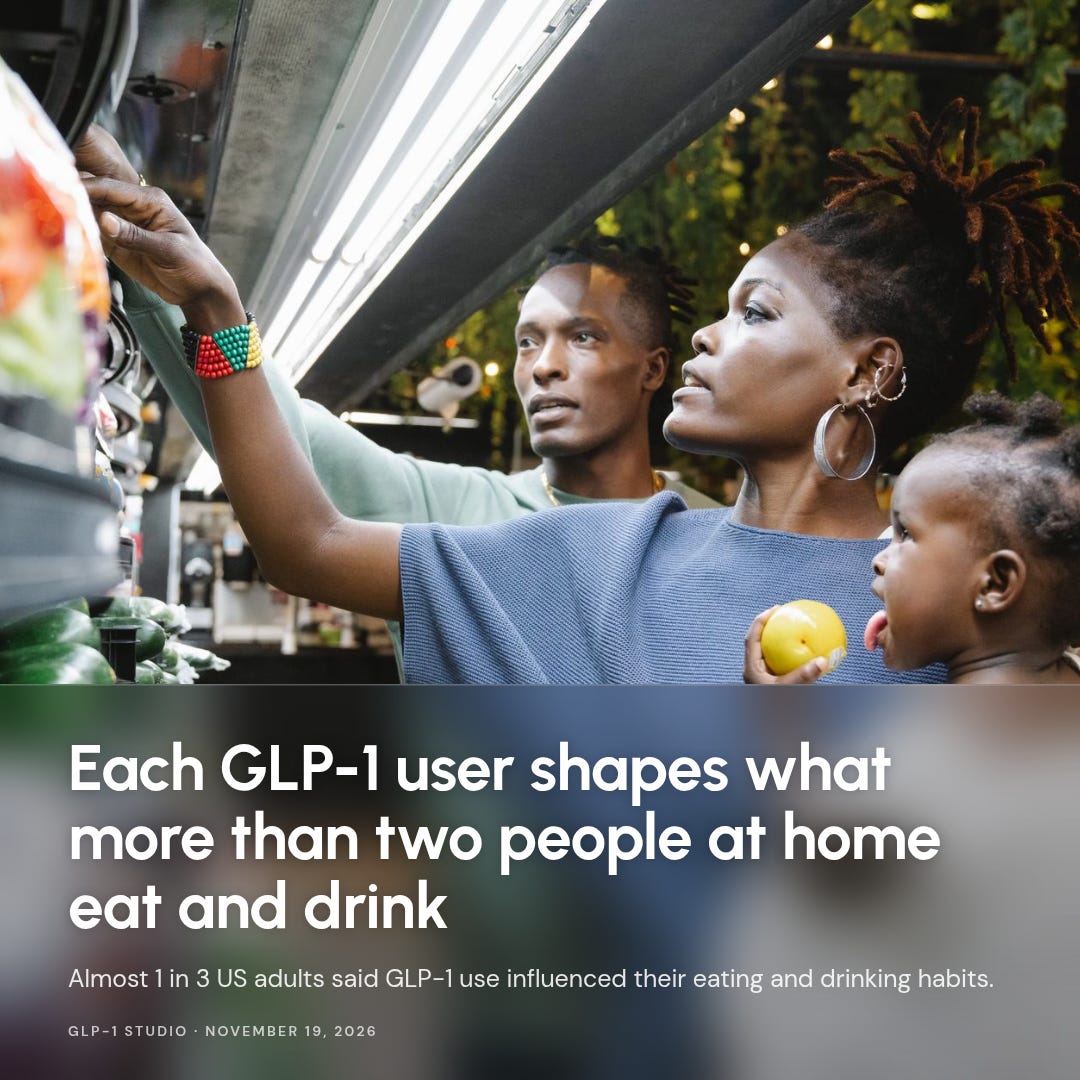
A customer data firm says each GLP-1 user shapes what more than two people at home eat and drink (Just Drinks)
A CDC survey found about 2 in 5 GLP-1 users took their medicine differently than prescribed (Medical Xpress and CDC MMWR)
In four states that ended Medicaid coverage of GLP-1s for weight loss, prescriptions fell about 84 percent compared with states that kept it (News-Medical and JAMA)
Telehealth companies are getting FDA warning letters over how they describe compounded GLP-1s (Medical Daily)
A customer data firm says each GLP-1 user shapes what more than two people at home eat and drink
Key Details:
The firm, Dunnhumby, surveyed 8,500 people in August across six countries: the US, Canada, Mexico, Brazil, Colombia and Chile.
Across those countries, about 10 percent of adults had used a GLP-1, and about 21 percent said the drugs shape their food and drink choices.
In the US, close to 17 percent of adults had used one, and almost 1 in 3 said GLP-1 use influenced their eating and drinking habits.
Among adults thinking about starting a GLP-1, cost was the most common reason they had not yet, at about 27 percent.
Source: Just Drinks
A CDC survey found about 2 in 5 GLP-1 users took their medicine differently than prescribed
Key Details:
The report ran in the CDC's Morbidity and Mortality Weekly Report, using survey answers collected in July and August 2025.
About 1 in 10 US adults said they had taken a GLP-1 in the past year.
About 1 in 5 users said they used a compounded version, which the FDA does not review for safety, effectiveness or quality before it is sold.
The authors wrote, "Modifications in GLP-1 medication use reflect, in part, responses to cost- and access-related challenges."
Source: Medical Xpress and CDC MMWR
In four states that ended Medicaid coverage of GLP-1s for weight loss, prescriptions fell about 84 percent compared with states that kept it
Key Details:
California, New Hampshire, Pennsylvania and South Carolina ended that coverage on January 1, 2026, and University of Pittsburgh researchers compared them with 10 other states.
Pennsylvania had the largest drop, at 95.5 percent, followed by New Hampshire at 88 percent.
The researchers estimate that between 175,500 and 526,600 fewer people on Medicaid may have filled a prescription.
Senior author Timothy Anderson said, "It is not surprising that abruptly ending drug coverage creates major disruptions in care."
Source: News-Medical and JAMA
Telehealth companies are getting FDA warning letters over how they describe compounded GLP-1s
Key Details:
The latest round, announced June 16, was 25 letters about compounded semaglutide and tirzepatide, and in one case liraglutide.
Those letters flagged labels with the telehealth company's name, claims that the products were FDA-approved, and pharmacies described as "FDA-approved" or "FDA-licensed."
Earlier letters cited phrases like "Generic Zepbound," and the article notes that compounded drugs are not generics.
As of May 31, the FDA had received 990 adverse event reports tied to compounded semaglutide and more than 730 tied to compounded tirzepatide, and those reports alone do not prove harm.
Source: Medical Daily
Learn More
Join the free GLP-1 community Cozy Butter: cozybutter.com
Listen to GLP-1 Radio, GLP-1 shows all day: glp1radio.com
Every GLP-1 Studio Daily episode: GLP-1 Studio Daily
About Amanda Bonello: amandabonello.com

This is a reader-supported publication, thank you so much for your support.
💖


