

I’m finally bringing some of my older advocacy work over to the Studio. This was my first article and advocacy video.
I wrote this during the worst of the GLP-1 shortage. I remember sitting at my desk feeling equal parts exhausted and furious, watching story after story pour in from our community.
People weren’t just frustrated, they were terrified.
They were making calculations no one should have to make. Medication or groceries. Stability or savings. Trust a source you’re not sure about or go without entirely.
Through the GLP-1 Collective, I drafted a statement to the FDA. This was actually the 2nd time I’d written but I was hoping the weight of the petition would provide us with more leverage.
The FDA needed to recognize that patients weren’t just data points or line items in a shortage report, we're people whose lives were literally hanging in the balance while shortage and regulatory decisions were being made in rooms where patient voices weren't even part of the conversation.
I wasn't asking for corners to be cut. I wasn't demanding they compromise safety. I was asking them to be transparent and put patients first, to show patients with obesity the same respect and care they had given pregnant women, cancer patients, and people seeking birth control in the past.
They did not respond.
I’ll never know if this letter or the video made a difference. But compounded GLP-1 medications are still available, for now. So I can only hope it played a small part.
Below is the complete open letter and article as originally published in April 2025.
GLP-1: A Crisis in Access
An Open Letter to the U.S. Food and Drug Administration Submitted by the GLP-1 Collective | April 2025
As the founder and president of the GLP-1 Collective, I am sharing the official reading of our open letter to the U.S. Food and Drug Administration.
This letter was submitted on behalf of a national coalition of patients, providers, caregivers, and nonprofit leaders who have come together to raise a clear and urgent concern: the U.S. healthcare system is failing people who rely on GLP-1 medications.
These are not cosmetic drugs. They are clinically validated treatments for obesity, type 2 diabetes, cardiovascular risk reduction, and other serious conditions. Yet patients are being priced out, denied coverage, and forced into unsafe and unregulated markets — not due to lack of evidence or medical necessity, but due to policy inaction and regulatory ambiguity.
The GLP-1 Collective is a patient-led 501(c)(3) nonprofit that exists to fill these gaps in access, education, and support. We have heard from thousands of people, many of whom are turning to compounded or gray market products simply to stay on treatment. The consequences are escalating.
This letter outlines:
The systemic breakdowns we are witnessing in real time
The direct action our nonprofit has taken to intervene
A set of regulatory requests to the FDA
Supporting data and historical precedent for bold agency response
Urgent Request to Address the Failure in Access to GLP-1 Medications
The Current Access Crisis
We are writing as a grassroots, community-led nonprofit committed to one goal: ensuring that people have safe, affordable access to GLP-1 medications. We are led by the patients most affected, and our priorities reflect their lived experiences — not the interests of industry stakeholders.
We are told the shortage is over. But access has not been restored. If a drug is priced beyond reach and insurers refuse to cover it, then it is not accessible. The fact that it’s technically available on the shelf is meaningless when patients cannot afford it. Access is still broken — and the health fallout is growing.
Over the past several months, we have seen an escalating crisis. Thousands of patients across the country are being cut off from GLP-1 medications due to a combination of unaffordable pricing, insurance and PBM denials, and now the FDA’s decision to restrict compounding. For many, compounded medications were the only pathway they had left. That option has now been removed, without a single safe and affordable alternative in its place.
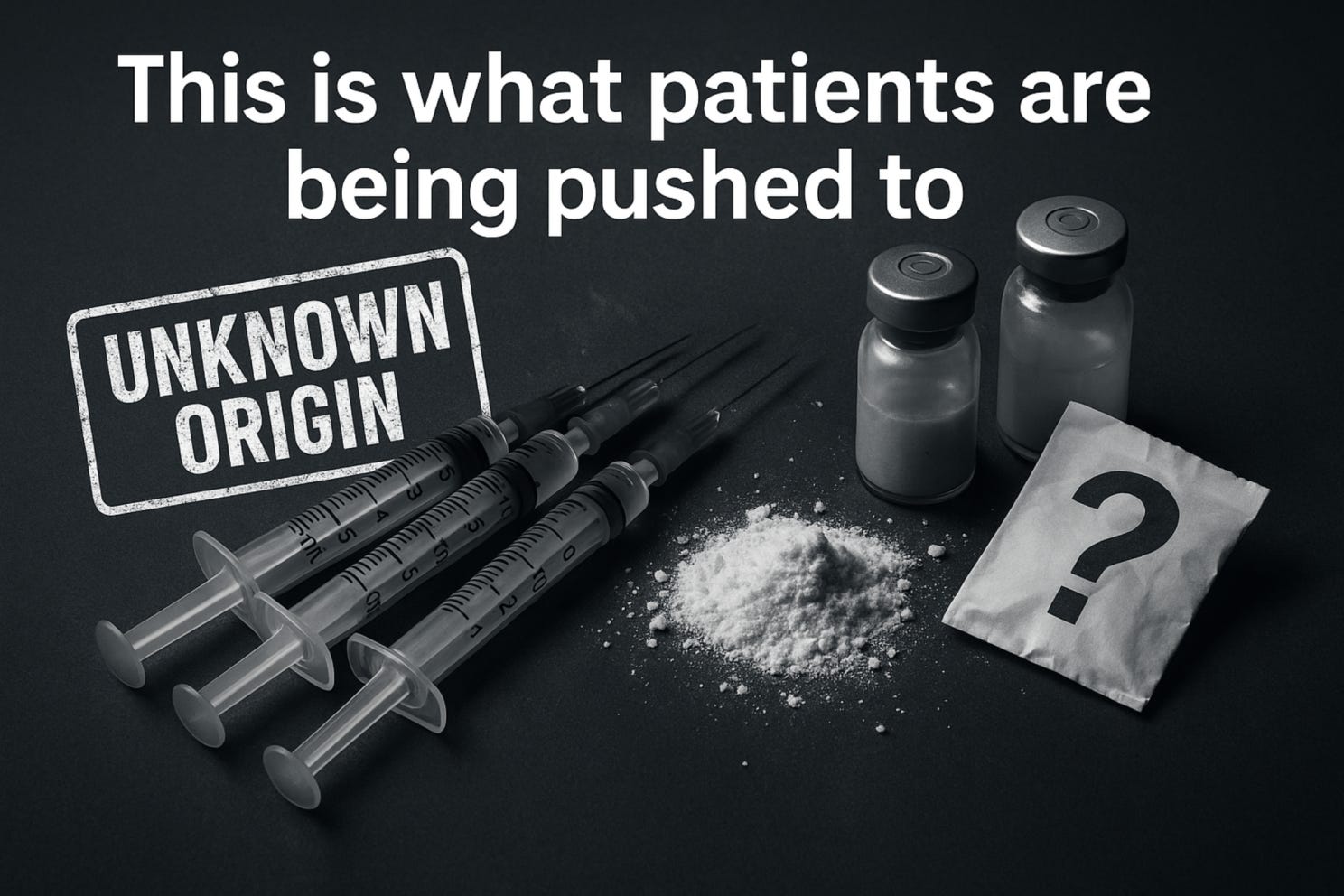
As a result, people are turning to the unregulated (grey) market. We speak directly with patients through our peer-led support groups and communicate daily with the broader community through social media. People reach out to me personally to share their stories — and increasingly, those stories are filled with— people mixing research peptides, sourcing from overseas, or going without entirely. This is not theoretical. This is happening right now. And it is a direct result of policy decisions that ignore the real-world consequences.
In response, we’ve been actively connecting community members with reporters, researchers, and aligned nonprofits working to document these access issues and push for long-term solutions. I also interview patients on our community podcast, where people share their personal experiences to show just how essential affordable access is.
One community member recently shared the following:
“... my doctor prescribed me Zepbound for weight loss. I was 409 lbs and my insurance denied me due to good lab work (my A1C was just under pre-diabetic). I ended up with Amble, which was draining me dry to the point I was borrowing money from my parents and looking for a second job. Now I am ordering peptides from the gray market and having to reconstitute them myself.”
Sadly, this is no longer an uncommon story. People are reaching out because they’re running out of options — and asking for help that simply doesn’t exist within the current system.
The GLP-1 Collective’s Response
We are witnessing the consequences of these failures every day. These are not fringe cases. This is now the norm. And it is happening because people are desperate, and because the system has taken away every regulated, affordable option. The FDA may not see it happening, but we do — and we find it deeply disturbing.
That is why we’re launching GLP-1 Access Now, a prescription assistance program designed to help people pay for their GLP-1 medications. Within 24 hours of announcing the program, nearly 40 people joined the Collective in search of support. People are not just interested — they are actively waiting. They need help now.
We are currently raising funds to provide this assistance — but we shouldn’t have to fill the gap left by policy failure. This is a regulatory and systemic issue. And it demands a regulatory and systemic solution.
To further underscore how urgent and widespread this issue has become, nearly 27,000 patients, providers, and advocates have signed a petition calling on the FDA to act. Over 380 of them left public comments expressing their personal experiences and pleas for help. These are not anonymous voices — they are real people, many of whom have donated their time, money, and stories to make themselves heard.
These patients are not nameless. They are not hypothetical. To demonstrate just how important this issue is to the general public, we’ve included five of the 380+ public comments submitted to our petition below. The full list of comments is attached as Appendix A, and the complete list of petition signatures is included in Appendix B.
Patient Testimonies
Angela Gutierrez – Buckeye, AZ – 2024-11-23 “Many people don’t have access to name brand. Compounded medication has given me my life back along with so many others. If big pharma can’t make their drugs affordable, we need to be able to access our medication to take control of our health.”
Linda Gensheimer – Hickory, NC – 2025-03-14 “I’m on a very limited budget, just Social Security. Medicare does not cover tirzepatide or semaglutide. Fortunately I can afford the compounded version. I have finally lost weight, my b/p is down, and my back issues are resolving. Not allowing compounding will adversely affect my health.”
Deanna Ruiz – Knoxville, TN – 2024-12-19 “My physician prescribed compounded tirzepatide as an affordable option when my insurance refused to cover the name brand. It’s given me my life back! Don’t let profits get between doctors and patients. We all deserve good health — not just those who can afford hundreds or thousands per month.”
Aimee Kneip – Monticello, MN – 2024-11-22 “My mom has struggled with her weight my whole life and was finally feeling better when she accessed this medication. Then her insurance stopped covering it and she can no longer afford it. Please help people like my mom!”
Susan Hendricks – Selinsgrove, PA – 2025-03-08 “My insurance doesn’t cover Tirzepatide. With compounding, I can afford it. Many can’t. In 6 months I lost 54 lbs., reversed prediabetes, eased chronic pain, and normalized my cholesterol. These medications work — and people need access.”
Let us be clear: Obesity is not cosmetic.
It is a chronic, progressive disease linked to several of the leading causes of death in the United States — including heart disease, stroke, type 2 diabetes, and certain cancers. It contributes to over 500,000 deaths each year and drives more than $170 billion in healthcare spending annually.
GLP-1 medications are not vanity tools.
They are evidence-based, effective treatments that help people live longer, healthier lives. For the first time in decades, U.S. obesity rates did not rise in 2023. GLP-1s played a critical role in that progress.
Patients should not be abandoned just as we’ve begun to turn the tide.
When a person has a disease, they need treatment — not stigma, not silence, not inaction, and not a regulatory system that blocks them from every direction. Everyone deserves the opportunity to live a long, healthy life.
Urgent Regulatory Actions Requested
We are not asking the FDA to bypass safety. We are asking for the same level of responsiveness, compassion, and urgency that has been extended to other patient populations in moments of crisis. The current approach is failing, and patients are already being harmed.
We respectfully urge the FDA to take immediate, actionable steps — even if that means starting with just one of the following:
Allow continued access to compounded GLP-1 medications until affordable, FDA-approved alternatives are widely available.
Fast-track generic GLP-1 approvals to increase competition and drive down costs for patients.
Work with manufacturers to expand patient assistance programs and implement pricing reforms that prioritize public health.
Ensure insurance companies and PBMs cover GLP-1 medications as medically necessary care — not luxury treatments.
Establish emergency access programs for patients who are currently priced out of treatment.
Even one of these interventions would make a measurable difference. In addition, we request the following:
A meeting with FDA officials within 30 days to discuss this crisis, proposed solutions, and the role of patient advocacy organizations in shaping responsive policy.
Increased transparency regarding any active petitions, enforcement considerations, or regulatory plans related to GLP-1 access and compounding.
A formal public acknowledgment that the current GLP-1 access crisis constitutes a public health emergency requiring cross-agency coordination and urgent intervention.
FDA Precedent on Access
To support our requests, we have included Appendix C: Comparative Analysis of FDA Flexibility in Drug Access and Enforcement. This chart provides a comparative analysis of the FDA’s own history of regulatory discretion across a range of drug classes to improve affordability and patient access — especially in cases involving monopoly pricing, public health risk, or urgent medical need.
The chart highlights key examples where the FDA has previously taken action to protect access, including the following:

Makena, was compounded for pregnant women for 12 years — arguably one of the most safety-sensitive populations — and it was done so under an active patent, during a public affordability crisis, with the FDA’s full awareness and approval. This access was preserved despite manufacturer objections, clinical debate, and commercial exclusivity — all of which make the FDA’s current posture toward GLP-1 medications deeply inconsistent.
When KV Pharmaceutical publicly claimed that the FDA would take enforcement action against compounders, the agency issued a rare correction:
“This is not correct — the FDA will not take action against these companies.”
Shortly thereafter, the FDA further clarified its official position:
“In order to support access to this important drug... FDA does not intend to take enforcement action against pharmacies that compound hydroxyprogesterone caproate based on a valid prescription for an individually identified patient.”
These statements reflect an approach centered on patient access — even in the face of manufacturer pressure and regulatory complexity. We ask why that same standard has not been applied to GLP-1 medications, which treat a chronic disease affecting millions and contributing to over 500,000 deaths each year.
EpiPen, received fast-tracked generic approval and direct public pressure from the FDA — even while still under patent — due to unaffordable pricing and public outcry. In this case, the FDA clearly recognized the urgency of access and responded with regulatory action.
As former FDA Commissioner Dr. Scott Gottlieb stated at the time:
“Today’s approval… is part of our longstanding commitment to advance access to lower cost, safe and effective generic alternatives… as part of our overarching effort to remove barriers to generic development and market entry of critically important medicines.”
This was a clear demonstration of the FDA’s ability to act in the interest of affordability, competition, and patient protection — even under legal and commercial complexity.
Yet for GLP-1 medications, which serve millions of Americans with chronic disease, the FDA has issued no such guidance, no public statements on affordability, and no regulatory action to support access.
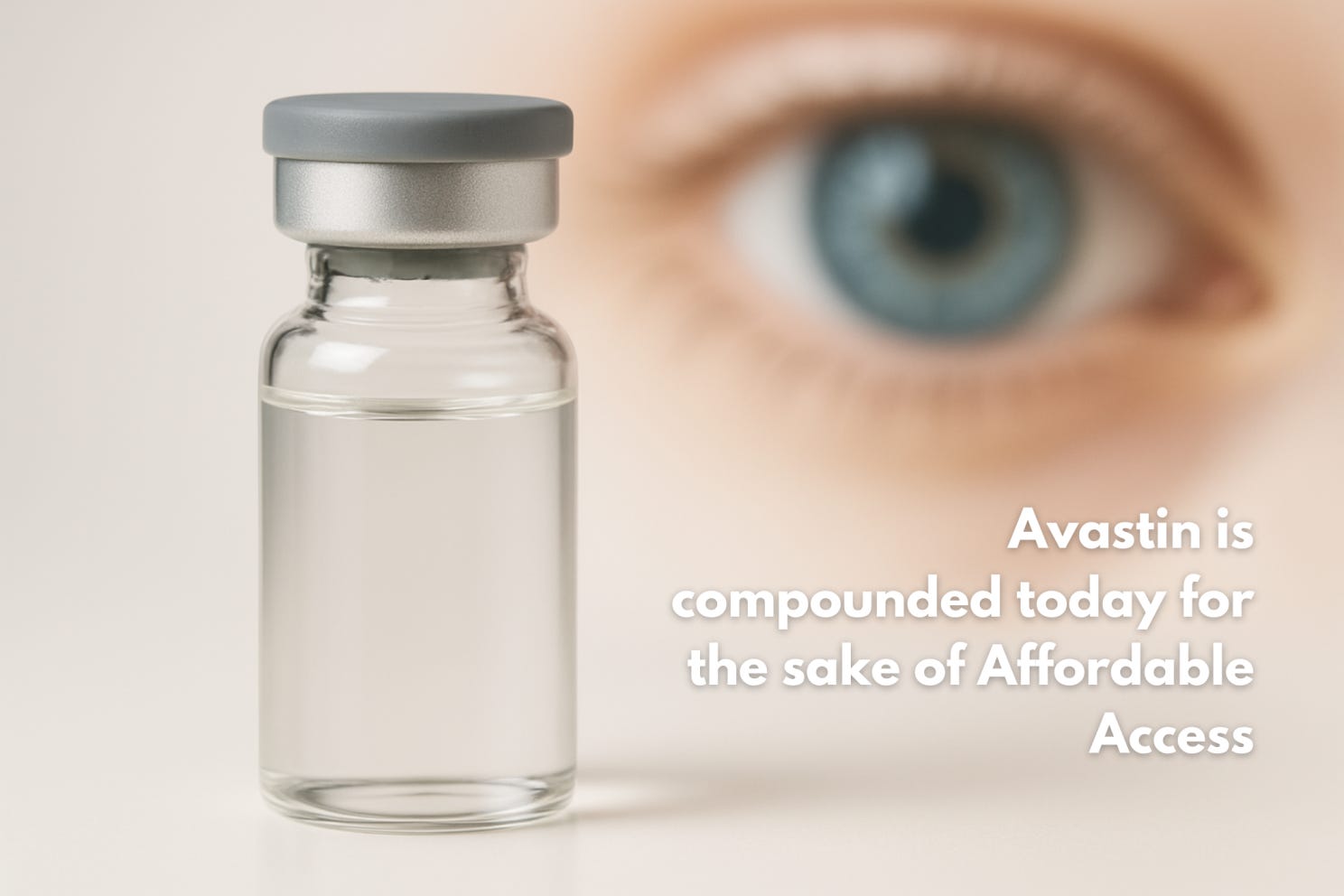
Avastin, a cancer therapy, continues to be compounded off-label today to improve affordability — particularly in ophthalmology, where it is used to treat age-related macular degeneration at a fraction of the cost of brand-name alternatives. The FDA has acknowledged this practice and has not taken enforcement action, allowing compounding to persist due to the clear public health benefit and cost savings.
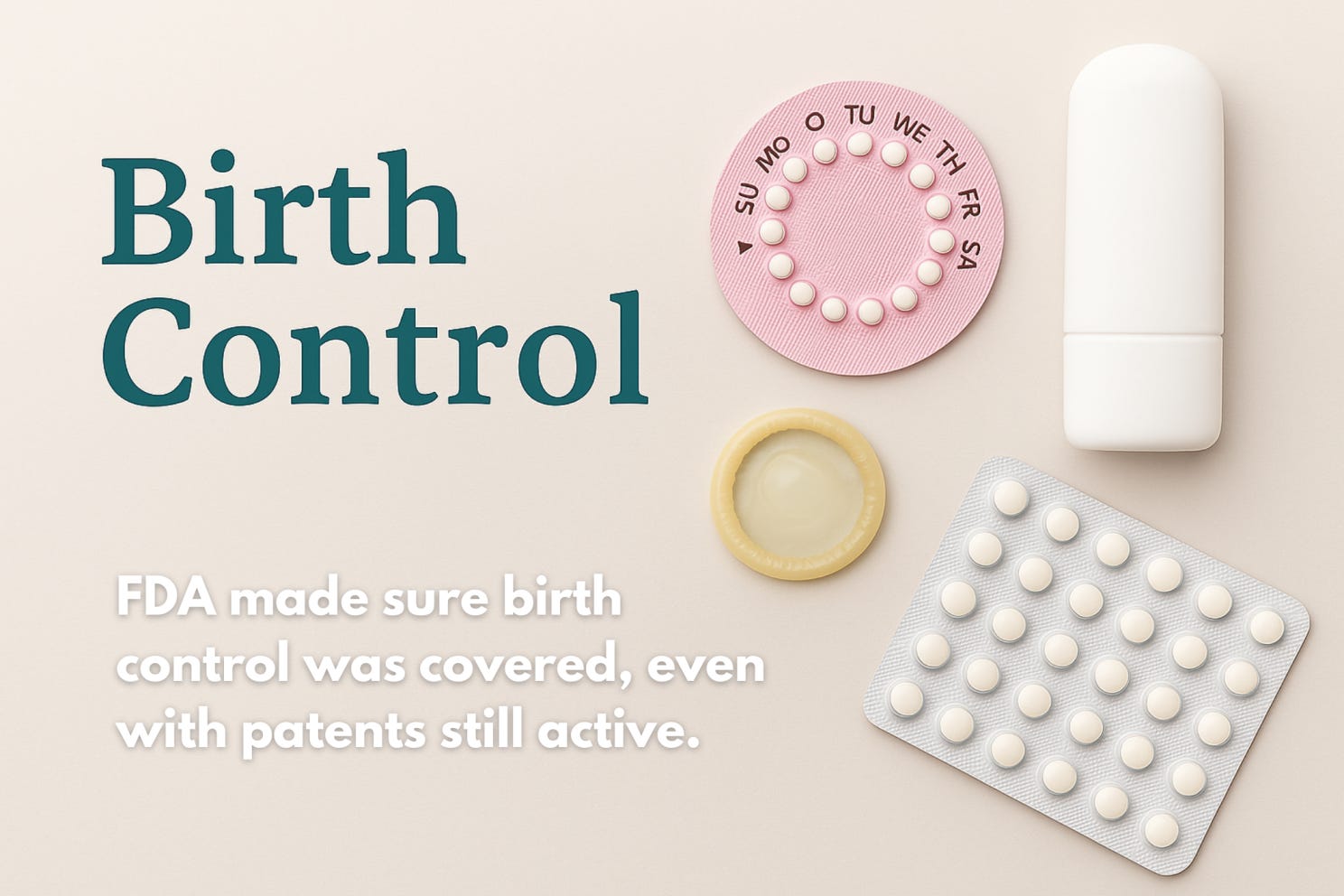
Birth control received regulatory support under the Affordable Care Act, which mandated insurance coverage for contraceptives — even during active patent periods. This ensured access for millions of patients based on public health rationale, despite commercial exclusivity, setting a precedent for prioritizing affordability over industry profit.
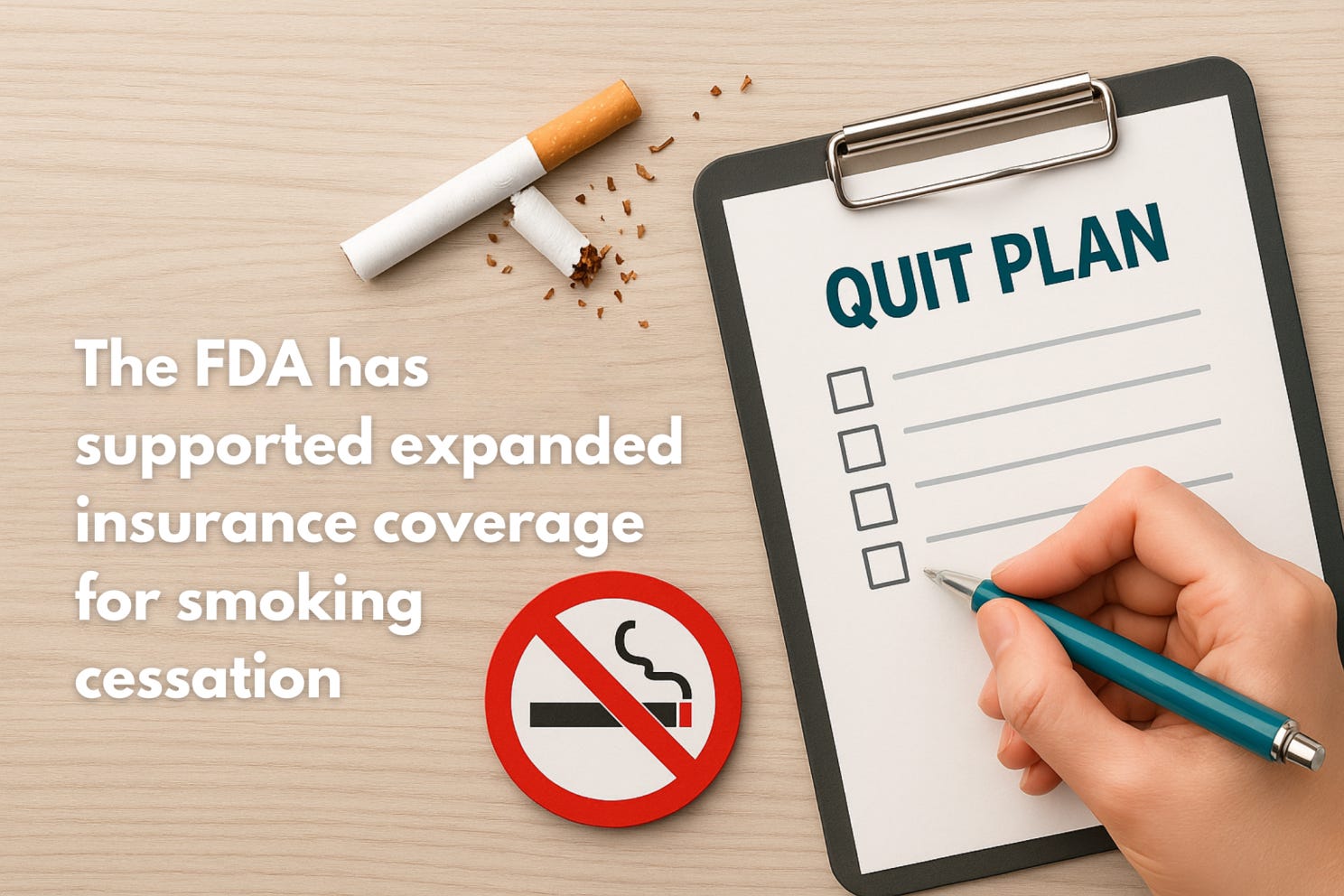
Naloxone and smoking cessation therapies, were supported by FDA-led initiatives designed to combat national health crises. These included fast-tracked approvals, over-the-counter transitions, and cross-agency collaboration to increase availability, reduce overdose deaths, and expand access to treatment options. In both cases, FDA action centered on affordability, harm reduction, and urgent medical need.
This is not speculation. These are well-documented examples of the FDA using its authority to step in when lives and livelihoods were on the line. The same must be done for GLP-1 medications.
Call for Transparency
The agency is now considering adding GLP-1 medications to its newly created “Demonstrably Difficult to Compound” list — a designation that could permanently prohibit compounding, regardless of shortage or medical necessity. This decision is being weighed without public input, without transparency, and without acknowledging the very real possibility that it is the FDA’s own enforcement posture pushing patients into unregulated and unsafe markets.

By cutting off access through legitimate, regulated compounders, the FDA may be exacerbating the very safety risks it claims to prevent. If safety is truly the concern, the agency must distinguish between FDA-inspected 503B outsourcing facilities — which produce sterile, exact copies — and gray market or research chemical suppliers operating with no oversight. And it must release data — not assumptions — to justify any future actions.
Before any final decision is made, we urge the FDA to:
Publicly disclose the evidence being used to evaluate GLP-1s for inclusion on the DDC list
Allow public comment and input from independent experts and advocacy groups
Clarify how it is distinguishing safety concerns between the gray market and regulated compounders
To do otherwise would not only contradict past precedent — it would increase risk, reduce oversight, and leave patients more vulnerable than before.
Conclusion
The access crisis surrounding GLP-1 medications is not abstract — it is immediate, measurable, and deeply human. We have shared the stories of real patients, presented the data, outlined specific regulatory solutions, and highlighted clear precedent for FDA action. The tools exist. The evidence is here. What’s missing is a coordinated and compassionate response.
Patients should not have to choose between financial ruin and untreated disease. They should not be forced into unsafe alternatives because every formal access point has failed them. And they must not be excluded from decisions that directly impact their health, safety, and future.
We are not asking the FDA to abandon scientific rigor or compromise on safety. We are asking you to meet this moment — with the urgency, transparency, and leadership it demands. Patients are watching. Providers are waiting. Communities are organizing. The time to act is now.
Update: The GLP-1 Access Now prescription assistance program mentioned in this letter is still in development. If you'd like to support or stay updated, visit GLP1Studio.com.
If this issue matters to you — whether as a policymaker, public health professional, or community member — I invite you to read, share, and respond. We are not asking for exceptions. We are asking for equity, transparency, and action.


