

I created this piece through the GLP-1 Collective, which I founded and still lead as executive director. And honestly, even our small contribution to their work felt like a privilege.
I-MAK doesn’t lobby. They don’t play politics. They just pull back the curtain. Their 2018 insulin report showed the world exactly how pharmaceutical companies use the patent system to keep prices high—filing dozens of overlapping patents on minor tweaks that don’t improve patient outcomes but do extend monopoly control for decades.
That report didn’t just make noise. It got cited in Congressional hearings. It informed federal investigations. It helped build the pressure that eventually led to the $35 insulin cap for Medicare recipients.
Real transparency led to real change.
So when they released their 2025 report showing the exact same playbook being used on GLP-1 medications, I wasn’t shocked. I was angry. Over 300 patents filed on just five products. Generic alternatives potentially blocked until the late 2030s. The same tactics, the same companies, the same patients left holding the bill.
When I-MAK reached out, we jumped at the chance to help—even in a small way. We connected them with people in our community who were willing to share their stories. Because data is powerful, but it doesn’t capture what it feels like to ration your medication or go without because every door keeps closing.
Patient voices do that. And those voices needed to be part of the conversation.
I don’t know what will come from this work. I hope it sparks the same kind of attention and accountability that the insulin report did. I hope it leads to patent reform, stronger oversight, and faster access to affordable options for the people who need them now—not in 2038.
What I do know is that I-MAK proved change is possible. And being even a small part of their GLP-1 work reminded me why I keep showing up.
Below is the complete article as originally published in April 2025.

How I-MAK is Fighting for Affordable Access to GLP-1s
Published by Amanda Bonello through the GLP-1 Collective | April 2025
We were incredibly honored to collaborate, no matter how small our contribution, to support their groundbreaking work.
In 2018, I-MAK released a groundbreaking report that analyzed the patent practices of the three major insulin manufacturers: Eli Lilly, Sanofi, and Novo Nordisk.
For each insulin brand, companies had filed as many as 70+ patents, many of them overlapping or minor tweaks designed to extend monopoly control.
These overlapping patents, often referred to as “patent thickets,” had delayed the entry of lower-cost alternatives and helped keep insulin prices high, regardless of the fact that insulin had been available for over 100 years.
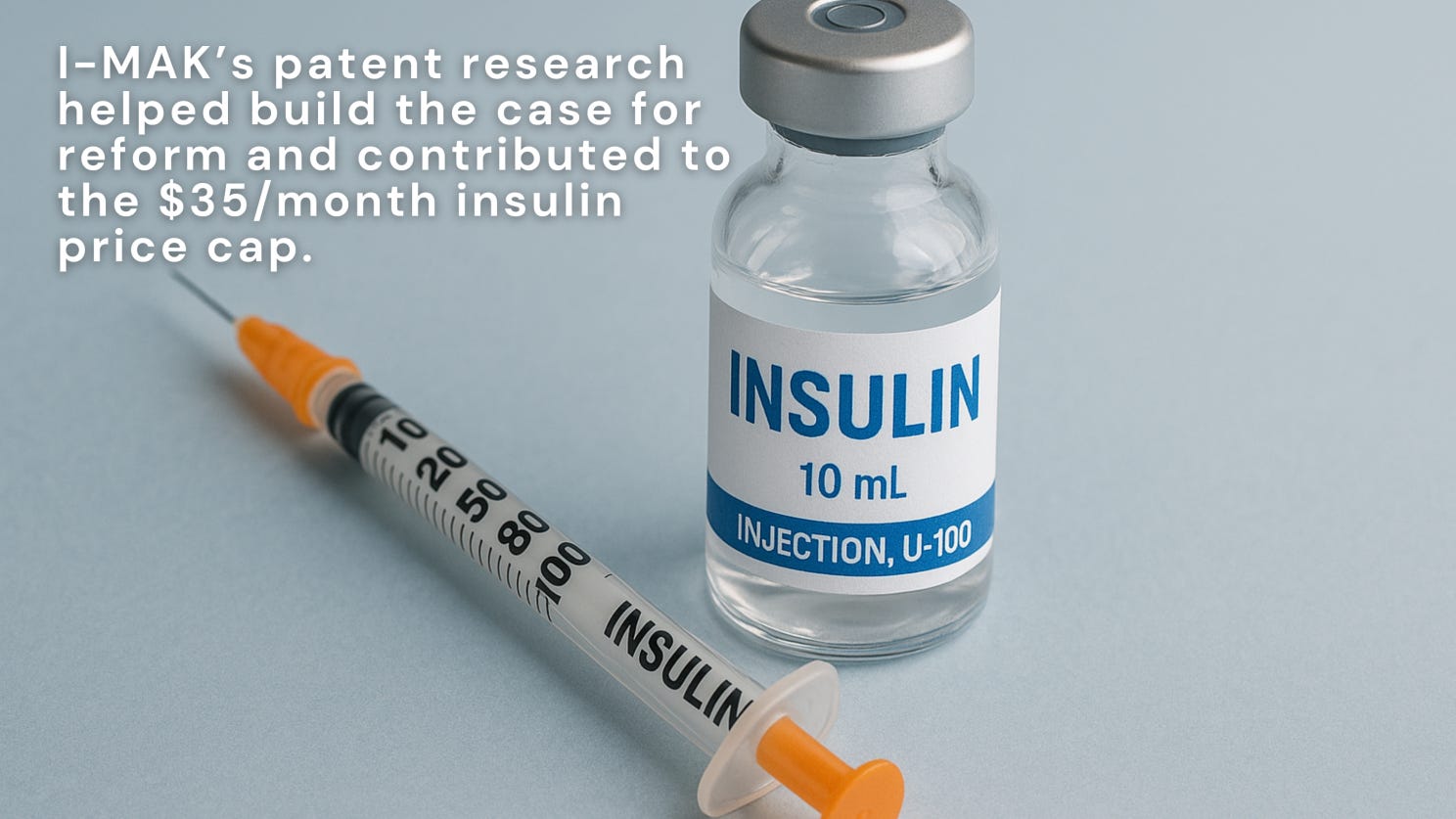
This report fueled media investigations, policy discussions, and public outrage. I-MAK’s work was cited in Congressional hearings, helped inform the U.S. House Oversight Committee’s investigation into drug pricing, and directly influenced the public pressure that led to insulin price caps being implemented at both the state and federal level.
Because of that momentum, insulin is now capped at $35/month for Medicare recipients, with similar caps spreading across the private insurance market.
I-MAK helped ignite that change, not by lobbying, but by pulling back the curtain on how drug companies manipulate the patent system at the expense of patients.
This March in 2025, I-MAK released a new report showing that the same patent tactics used to block affordable insulin are now being applied to GLP-1s.
Their findings show that Eli Lilly and Novo Nordisk have filed over 300 patents tied to five products: Ozempic®, Wegovy®, Rybelsus®, Mounjaro®, and Zepbound®. These filings could delay generic alternatives from entering the market until the late 2030s.
Many of these patents aren’t based on meaningful innovation. Instead, they cover small changes—like new injection devices, dosing instructions, or slight tweaks to the formula—that don’t improve health outcomes. These kinds of patents are often used to extend monopoly protections, which keeps prices high and makes it harder for more affordable options to reach patients.
We were deeply grateful for the opportunity to support I-MAK in bringing a human perspective to their data-driven work. We helped connect them with community members who wanted to share their stories and speak out about the barriers they faced in accessing their prescribed medications.
These voices help highlight the real-world impact behind the numbers. Together, the personal and the analytical paint a fuller picture of the barriers to access and why change is so urgently needed.
If patients still can’t afford the medications they’ve been prescribed, they don’t truly have access. And when pharmaceutical companies use the patent system to block lower-cost alternatives from entering the market, it leaves patients with no options.
We’ll be sharing these stories in tandem, helping to amplify the voices of those most affected and show what these structural barriers look like in everyday life. These stories aren’t just powerful—they’re necessary. They remind us that behind every statistic is a person being denied the care they need. We hope these voices will help drive the urgency for change and bring more people into the conversation about equity, access, and accountability.
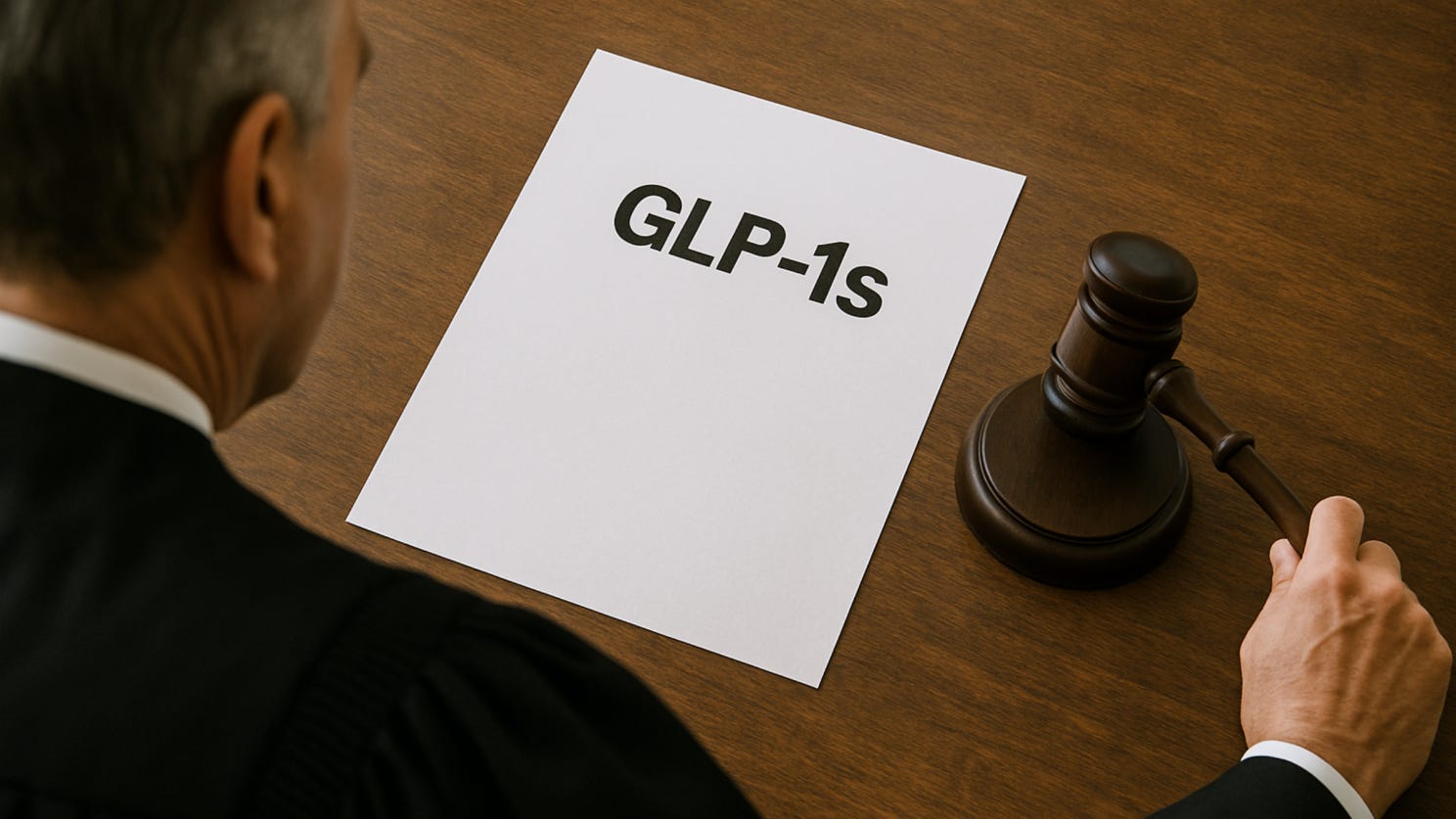
The GLP-1 Collective hopes this work will spark the kind of attention, accountability, and policy change that’s urgently needed. I-MAK has already shown what’s possible, their 2018 report on insulin patents helped lay the groundwork for real change.
Now, with GLP-1s, we believe this report, and the lived experiences that support it, can help build that same kind of momentum. We hope it leads to changes in how pharmaceutical companies are allowed to get and keep patents, stronger oversight of anti-competitive tactics, and faster, fairer access to affordable medications for the people who need them.
Read their full report here: i-mak.org/glp-1/
No one should have to choose between their health and their financial stability.
Disclosure: The GLP-1 Studio and the GLP-1 Collective are separate entities. I founded and continue to lead the Collective as executive director, but the Studio operates independently. All thoughts and opinions expressed here are my own. This content is not medical advice. I am not paid by pharmaceutical companies or compounding pharmacies, my work is entirely independent.
2026/01/11