
Andrew Dudum, CEO of Hims & Hers, spoke with CNBC this week about the Federal Trade Commission's lawsuit against the company, along with compounded GLP-1 drugs and artificial intelligence. The interview comes as GLP-1 medications continue to influence decisions well beyond the pharmacy, touching food companies, drugmakers and investors alike. For readers tracking this market, Dudum's comments offer insight into how one of telehealth's more visible leaders is responding to regulatory pressure and industry change.
The FTC's lawsuit centers on how Hims & Hers markets and sells its products, and Dudum used the CNBC interview to lay out the company's position on that scrutiny. He also addressed compounded GLP-1 drugs, which have become a flashpoint as demand for semaglutide and tirzepatide has outpaced supply from brand-name manufacturers. Compounding has allowed some telehealth companies to offer lower-cost alternatives, though it has drawn criticism from Eli Lilly and Novo Nordisk over safety and quality concerns. Dudum's comments on artificial intelligence pointed to how the company plans to use the technology in patient care, a signal that Hims & Hers intends to keep expanding its role in this market even as regulators examine its practices.
Nestle's push into this area reflects a broader shift among food and consumer brands trying to adapt to a customer base that eats differently while on GLP-1 medications. The company is using artificial intelligence and nutritional science to design products aimed at people managing reduced appetite and changed taste preferences, according to reporting on the effort. This is a notable pivot for Nestle, since GLP-1 drugs were initially seen as a threat to packaged food sales rather than an opportunity. If Nestle succeeds, it could set a template for other major food companies watching millions of new GLP-1 users change their shopping habits. For readers who use these medications, this trend may soon mean more products formulated with their specific needs in mind.
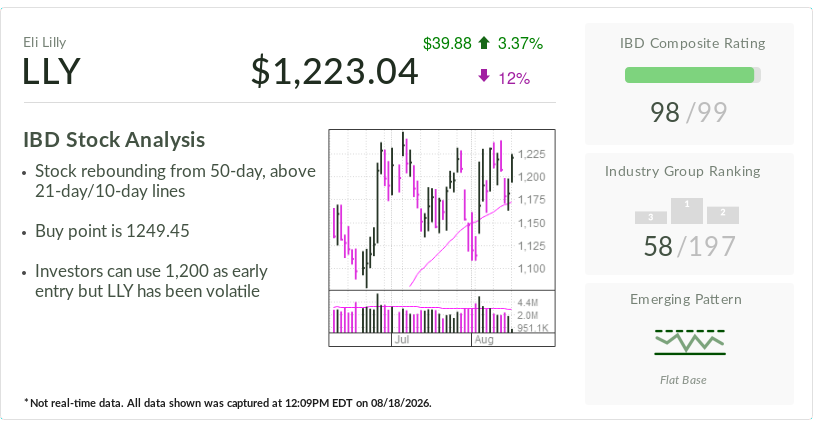
Eli Lilly's stock has drawn attention as IBD named it Stock Of The Day, citing two potential entry points as the company gains ground on rival Novo Nordisk. This matters for investors because Eli Lilly and Novo Nordisk remain the two dominant players in the GLP-1 drug market, and shifts in their competitive standing tend to move both stocks. Analysts pointed to Eli Lilly's momentum as a reason to watch these entry points closely, particularly for investors already following the weight-loss drug sector. Readers who hold either stock, or are considering doing so, may want to keep an eye on how this competitive dynamic develops in the coming weeks.
Amylyx shares climbed sharply after the company reported that its GLP-1 drug succeeded in a Phase 3 trial aimed at reducing hypoglycemia in patients who had undergone bariatric surgery. This is a meaningful result because hypoglycemia after bariatric surgery is a recognized complication, and there have been few effective treatment options for it. A successful Phase 3 trial moves Amylyx closer to a potential new approval, which would extend the use of GLP-1 drugs beyond weight loss and diabetes into post-surgical care. Investors responded quickly to the news, and the stock's jump reflects how closely the market is watching any expansion of GLP-1 drug applications.
With oral semaglutide now approved by the FDA and available alongside the injectable version, patients and doctors are weighing the two forms directly for the first time. The choice comes down to factors like convenience, dosing schedules and personal preference, since both forms rely on the same active ingredient. Some patients may prefer the oral option because it avoids needles, while others may find the injectable version fits better with a weekly routine rather than a daily pill. This is a meaningful development for anyone starting or adjusting semaglutide treatment, since it means the decision no longer defaults to whichever form happens to be available. Patients should talk with their doctor about which option better fits their lifestyle and treatment goals.
These developments make clear that decisions inside boardrooms and regulatory offices are starting to reach directly into how patients manage their treatment and how consumers shop for food. Anyone following the GLP-1 drug market, whether as a patient, investor, or industry watcher, should expect more of this cross-industry activity in the months ahead. If you are currently using semaglutide or considering it, take the oral-versus-injectable choice as an invitation to have a fresh conversation with your doctor about what fits your life best. And if you hold GLP-1-related stocks, keep watching how competitive shifts between Eli Lilly, Novo Nordisk, and smaller players like Amylyx play out, since those dynamics are moving quickly.
Key details
Hims & Hers CEO Andrew Dudum discussed the FTC lawsuit, compounded GLP-1s, and AI with…
Nestle is developing new products, using AI, to reach consumers taking GLP-1 drugs.
Eli Lilly stock has two potential entry points as it gains on Novo Nordisk.
Amylyx stock jumped after its GLP-1 drug succeeded in a Phase 3 trial for hypoglycemia.
Oral and injectable semaglutide are both FDA-approved, giving patients a real choice.
Read this on GLP-1 Nation: https://glp1nation.com/edition/23