
If you told me I’d be petitioning the FDA, organizing support groups, and connecting with policymakers, I wouldn’t have believed you. But when I saw how many people were scared of losing access, I had to act.
Key Details:
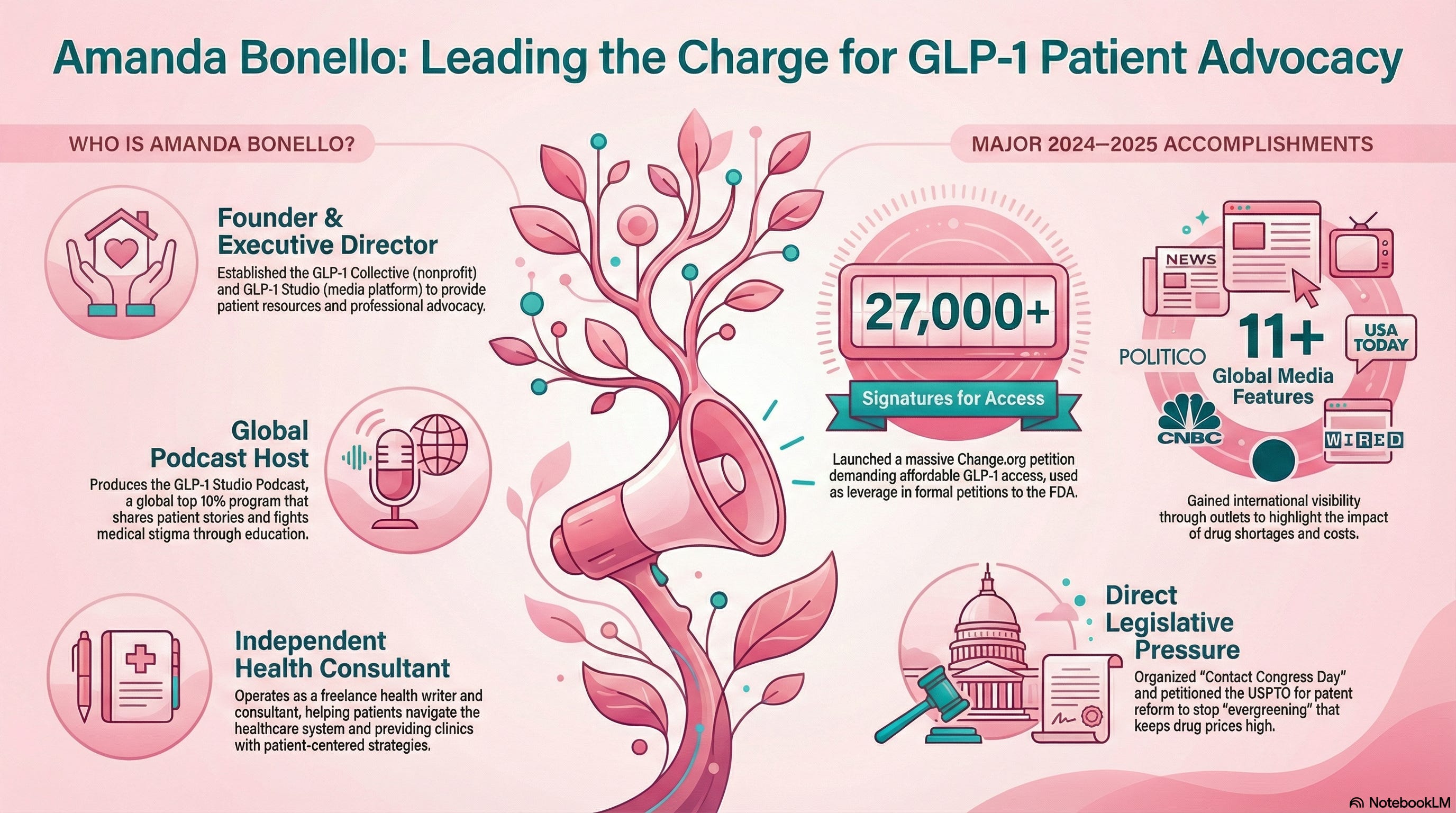
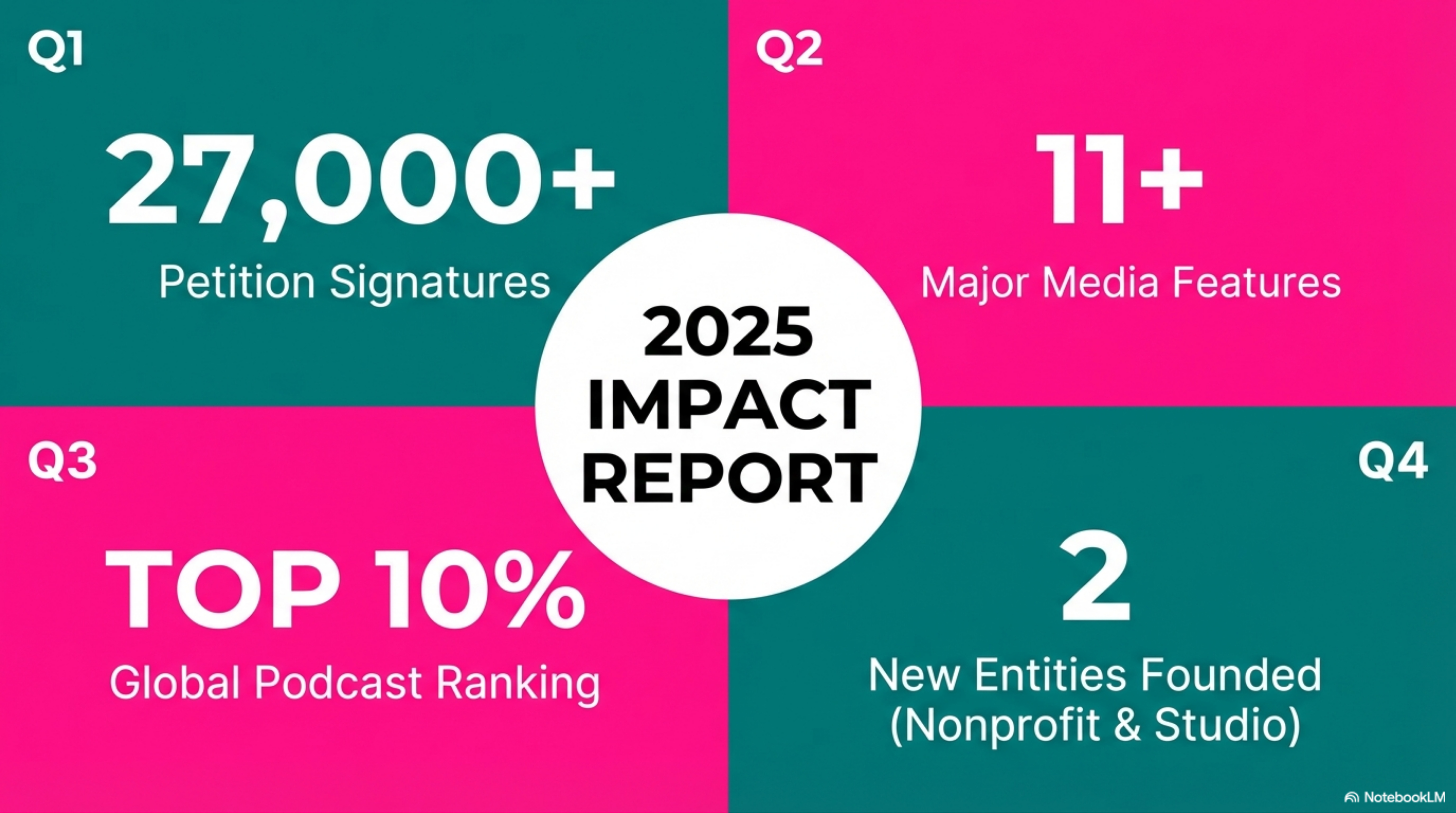
Launched a petition for affordable access to GLP-1s and raised 27,000+ signatures
Featured nationally and internationally in 11 media pieces
Hosts and produces the GLP-1 Studio Podcast, ranked in the top 10% globally
Founded the GLP-1 Collective nonprofit to support patients through education and resources
Launched GLP-1 Studio, an advocacy media production platform built to push this work further
The Petition: What Started it All
In October 2024, I took to Reddit for real GLP-1 patient experiences.
I’d heard all of the horror stories:
Stones in your gut
Thyroid cancer
Lizard venom
The list goes on, but every person I talked to was either on one or knew someone who was and they weren’t just living.
They were thriving.
I needed to know the truth. I went looking for “I lost weight and didn’t end up with Ozempic face” stories.
But what I found changed the entire course of my life: people terrified of losing access to lifesaving medication.
Two comments stuck with me.
One person who went from barely walking to running half-marathons. And another who’d been sober since starting GLP-1s after 14 years of alcoholism.
I thought, “How could anyone hear these stories and think that it was ok to take this medication away?”
I realized then that this wasn’t just about a drug, it was about the people who needed this medication to live healthy, happy, long lives.
There had to be some organization or group of people already advocating for access on a large scale.
At the time:
Dave Knapp was working on his Release the Vials campaign to bring down the price of brand-name medications.
Kim Carlos was advocating fiercely for obesity rights through the Plus Sidez Podcast.
Individual patients were speaking up on social media, but the work was scattered.
We needed something that could spread the word and bring patients together at the same time.
On November 19, 2024, I launched a Change.org petition demanding affordable access to GLP-1s.
The media reached out almost immediately.
The Media: The First Rallying Cry
Politico and USA Today both contacted me within the same week, and not long after, local news wanted an interview. That’s when it became clear this was bigger than I could have imagined.
I started hustling for signatures on Reddit right away and ran into a surprising amount of pushback.
People told me,
“Just go grey, petitions never work”
But if a problem stays hidden, nothing changes, and this wasn’t your average problem, this was a BIG one, and now it was front and center. This wasn’t about a petition magically fixing anything.
It was about giving people a visible rallying point so we could organize and make a real difference.
Since then, I’ve been featured nationally and internationally:
Politico: Prescription Pulse newsletter (November 26, 2024)
USA Today: Coverage on drug costs (December 1, 2024)
ABC’s Local 5 News: Local coverage urging FDA support (December 19, 2024)
CNBC: Zepbound shortage impact (December 24, 2024)
USA Today: Coverage compounding decisions (March 2, 2025)
Childhood Obesity News: FDA compounding decisions (March 5, 2025)
Fast Company: Potential disappearance of compounded medications (March 12, 2025)
Audacy’s KRLD NewsRadio 1080: Radio interview on FDA bans (April 1, 2025)
Wired: GLP-1 copycats and compounding landscape (May 14, 2025)
Reuters: Compounding crackdown and patient struggles (May 23, 2025)
Danish Broadcasting Corporation: International coverage on Novo Nordisk litigation (October 20, 2025)
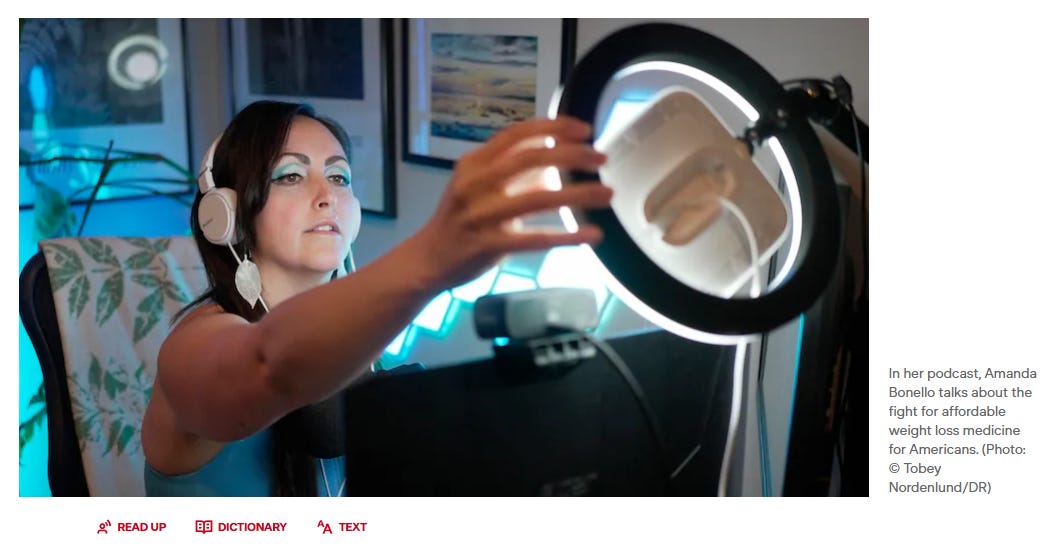
Beyond that, I’ve helped Reuters, WIRED, New York Times, Couch Health, I-MAK, a Danish documentary film crew, and Danish Broadcasting connect with GLP-1 patients. I even hosted Danish Broadcasting in my home.
But before DR visited my small Iowa home, I’d been working nonstop to make as many waves as possible. And once I saw how powerful media could be for reaching people, the next step was obvious.
A podcast.
The GLP-1 “Collective” Podcast: Formerly
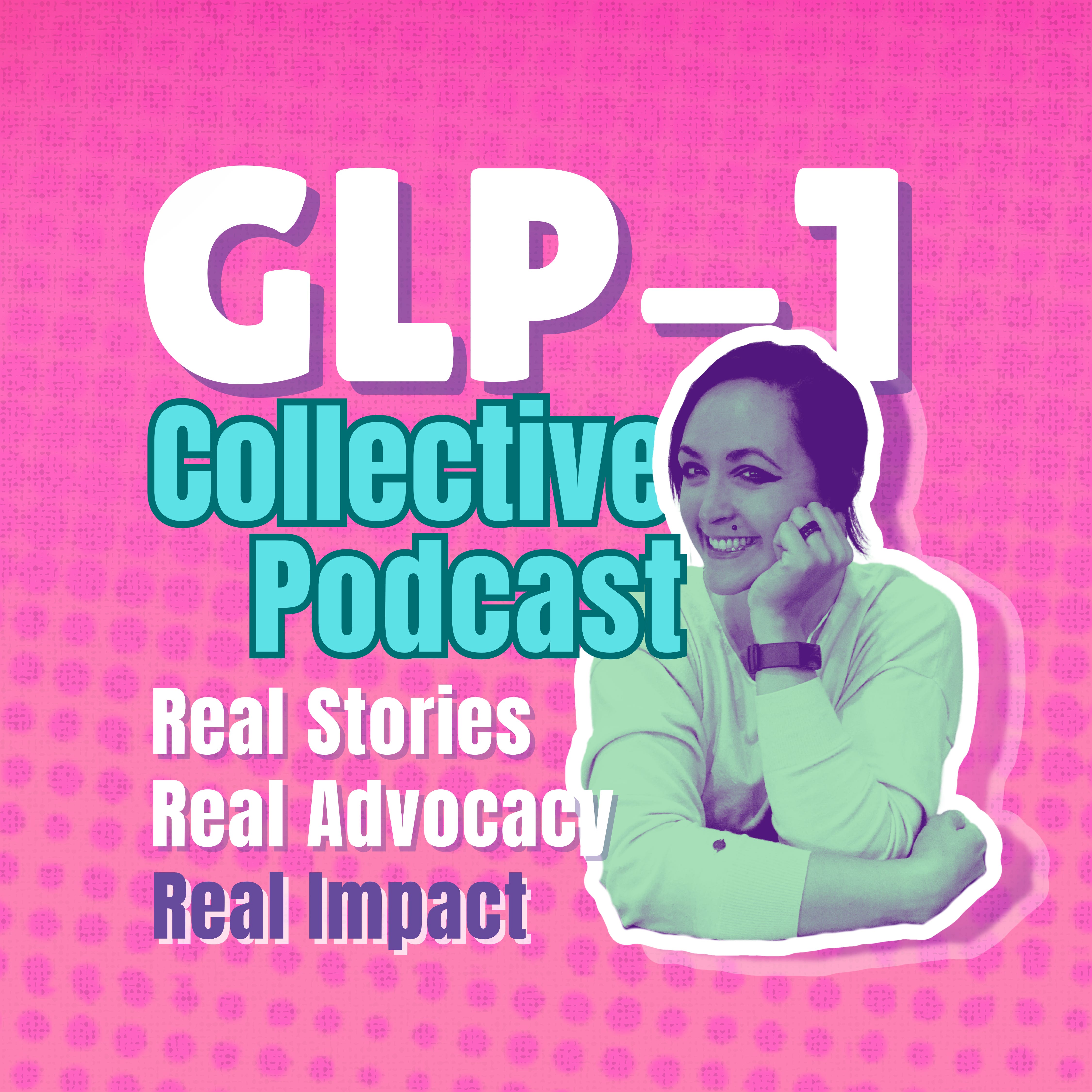
On December 28, 2024, I launched the “GLP-1 Collective Podcast.”
From the beginning, it was built around three core goals:
Interview patients to share their stories and bring compassion and understanding to this space, showing just how much access truly matters.
Fight stigma and misinformation through expert-led education, helping people understand how these medications actually work so they don’t have to fear the unknown.
Be a sounding board by keeping people informed about what’s happening, how they can take action together, and where to find community support.
That foundation became the heart of the podcast, and it delivered. Within its first year, it ranked in the top 10% globally.
I’ve had the honor of interviewing patients, experts, and advocates across 31 episodes. I’m grateful to have been able to share these inspirational journeys, along with quality education and supportive tools.
Highlights include:
Kim Carlos: Host of The Plus Sidez Podcast
Dr. Lindsay Ogle: Founder of Missouri Metabolic Health
Jamie Selzler: Executive Director of the North Dakota Democratic Party
Tahir Amin: Co-founder of I-MAK, co-hosted on The Plus Sidez Podcast
Dr. Craig Primack: Head of Weight Loss at Hims & Hers and former OMA president
I’m even more grateful to have been featured on some of the best podcasts in this space, including: The Plus Sidez, Missouri Metabolic Health, GLP-1 Hub, and In The Know With Nina.
Those conversations reinforced why this work matters and how powerful sharing stories can be.
One episode that’s especially close to my heart is the very first Studio Special, “Ozempic Saved My Life.” It features Cherie Sandholtz, who lost access to her medication and reached out to me when she didn’t know where else to turn.
This episode explores what happens when access gets cut off and the very real consequences that follow.
Cherie’s GoFundMe is linked below for anyone who’s able and willing to help her afford her next dose.
This is shared purely to support her, and I do not receive any compensation.
Around this same time, I launched TikTok and Instagram for the first time and quickly realized people weren’t just looking for updates. They were looking for each other.
The podcast was a powerful tool, but stories like Cherie’s made it clear that people needed a place they could actually go for resources and support.
The GLP-1 Collective Nonprofit: Supporting Patients
On January 10, 2025, I founded the GLP-1 Collective nonprofit.
The nonprofit had three main goals:
Support
Education
Advocacy
Through the nonprofit, I focused on supporting patients however I could.
I created programs and led events like:
Monthly Support Group: A monthly space for questions, connection, and support.
Patient Stories Blog: Patient stories that put access into real-world context.
GLP-1 Starter Kits: Donation-based starter kits with practical tools and trusted resources for patients new to GLP-1s.
(Currently paused while supplies are restocked.)
Local Iowa Chapter Meetups: Natural Grocers has generously allowed us to use their cooking classes as a space to meet up, connect, and learn something healthful together.
Live GLP-1 Q&As with Experts: I hosted live GLP-1 workshops that gave the community a chance to ask questions and get expert answers.
Dr. Lindsay Ogle: board-certified family and obesity medicine physician
Misty Tatom: nurse practitioner
Dr. Matthea Rentea: obesity medicine physician, host of The Obesity Guide podcast)
Tara Rothenhoefer: original Mounjaro clinical trial participant, lost 220 lbs
Gianna Beasley, MS, RDN: author of The GLP-1 Solution
This work mattered, and I’m proud of the impact it made. I’m grateful to everyone who showed up for the Q&As, and I’m especially grateful to Pureway Compliance and Natural Grocers for donating to the support kits.
But supporting the community was not my only objective. From the beginning, I wanted to make a tangible difference.
Advocacy Efforts:
Before the petition existed, I was just trying to build awareness.
Letters to the FDA
I reached out to multiple local and national news outlets, my local legislature, even Bernie Sanders’ HELP Committee, and finally I wrote to the FDA but no one got back to me.
At that point, it was clear we needed something big enough that it couldn’t be ignored. So I started the petition.

Once it reached 27,000+ signatures, it had real weight. I reached out to the FDA again, this time with four appendixes attached, including hundreds of comments from people struggling to access their medication.
Nothing puts it into perspective quite like reading page after page of comments like this.

But still I got no response.
I-MAK (Institute for Medicines, Access & Knowledge)
As this work grew, I-MAK reached out for help connecting with patients who were struggling to access their medication.
They were already deep into a major report on how drug manufacturers use patent thickets to extend GLP-1 monopolies, keeping prices high and cheaper options out of reach. What they needed was the human aspect to support the data, and that meant patient stories.
Patient connections are kind of my specialty.

I’d already been collecting stories and building relationships, so when I-MAK reached out, I was grateful for the opportunity to advocate for access alongside them, and especially grateful to the community members who trusted me enough to share.
That experience made one thing painfully obvious. This was a structural issue coming from multiple angles, and change was only going to happen if awareness existed at every level.
Letter to the USPTO
I-MAK is what inspired me to write to the U.S. Patent and Trademark Office next.
Patent evergreening was, and still is, harming real people by limiting access to these life-changing medications. They needed to know that patients are paying attention, and that we are actively advocating for patent reform.

Once again, there was no response, and patients continued to lose access. So I documented it.
Insurance Barriers
I wrote an article and created a full video spotlighting four women who were cut off from their GLP-1 medications for entirely different reasons, but with the same outcome.
Statistically, coverage looked widespread. In reality, access was far from attainable.

Some employers wanted to cover GLP-1s but couldn’t because their benefits plans excluded them for weight loss. Others fought through prior authorization, finally gained access, and were then cut off when policies changed.
One school district switched pharmacy benefit managers and reset the whole process overnight. Another patient had diabetes, changed jobs, and suddenly had to fight for a medication that had already been working.
This wasn’t abstract policy. It was happening in real time. And documenting the damage wasn’t enough. These stories needed to reach the people with power.
I’d exhausted every federal route I could. Congress was next.
Contact Congress Day
I organized a Contact Congress Day, rallying people to reach out to their local officials and share their lived experiences to show just how essential access truly is.
One patient did receive a response. A New York State legislator initially agreed to meet, then went silent when we followed up. But meetings weren’t the goal.
When people start calling and writing their representatives, legislators take notice, whether they agree with the issue or not. That pressure doesn’t stop at local offices. It’s what leads to broader policy conversations.
Obesity Action Coalition (OAC)
Eventually, I was invited to join an Obesity Action Coalition advocacy group.
OAC is a national nonprofit that works at the policy level through education, advocacy, and lobbying to improve obesity care and reduce weight stigma.
This relationship has only just started, and I’m excited to see what comes next.
The Reality Check
Working with patients and organizations showed what was possible when advocacy is collective.
But inside all of that were two wildly large aspirations:
Help people pay for their medication.
Take advocacy to the next level.
What I didn’t fully understand at the time was just how difficult it would be to accomplish them.
The nonprofit came with rules that made it nearly impossible to pull off. In fact, if I continued advocating the way I was, it could risk the nonprofit’s very existence.
And I wanted to advocate loudly, creatively, and without limits.

The GLP-1 Studio: An Advocacy Media Platform
On September 3, 2025 I founded the GLP-1 Studio and rebranded the podcast as the GLP-1 Studio Podcast.
After seeing how effective media could be at reaching people worldwide, I wanted to build an independent, patient-first advocacy media production platform with the potential for maximum reach.
Very quickly, the Studio began opening doors I never expected.
Obesity Week
I received media credentials to attend Obesity Week, one of the leading conferences in obesity care.
Being there meant sitting in concurrent scientific sessions, hearing the latest and upcoming research, shaking hands and talking with experts, and speaking up as a patient advocate in rooms where patients are usually talked about, not included.
It also meant meeting several podcast guests and community members in person.
GLP-1 Community Meetups
I attended several GLP-1 community meetups through Downsized and BioCare, and they ended up meaning more to me than the trip itself.
The BioCare girls showed up in a big way, advocating for access with me outside the GCCW building, and then hosting a series of meetups that kept the warm feelings going all week. I’ve been drinking the Kool-Aid (or Protein shakes 😉) ever since.
The meetups were expected. What came next was completely out of left field.
GLP-1s Covered Under Medicaid & Medicare
While I was at Obesity Week, a presidential announcement dropped that instantly changed GLP-1 patient access. GLP-1s for weight loss could now be covered under Medicare and Medicaid, with a co-pay of just $50.
This was the biggest news in patient access we’d ever seen.

Mike Donnelly-Boylen and Zach Niemiec invited me to join a private filming session with a Danish GLP-1 documentary crew. I had previously connected them with a patient for interviews, and now I was meeting them in person.
The three of us sat side by side on a hotel room couch, cameras rolling, recording our reactions as the presidential announcement unfolded.
It was completely surreal.
And with Novo Nordisk being one of Denmark’s largest companies and employers, the documentary crew wasn’t the only Danes paying close attention.
Almost simultaneously, DR reached out again, just months after filming in my home, to capture my reaction as I rushed to the airport.
Talk about a whirlwind of a week. Scratch that. A whirlwind of a year.

My Work Beyond Formal Advocacy
Alongside formal advocacy, I’ve been freelancing as a health writer and consultant to help support the work and my family when advocacy alone wasn’t enough.
That’s meant helping patients understand how to navigate the healthcare system and advocate for themselves, helping organizations better understand the patient experience so their strategies are actually compassionate, writing deeply researched and medically reviewed GLP-1 guides, and doing GLP-1 clinic reviews.
It’s been one of the most educational parts of my work, and I can say with full confidence that finding safe, affordable options is not easy and often comes with a catch.
I rotate providers and go through the full process firsthand so patients don’t have to waste months of time, money, and emotional energy figuring it out the hard way.
Closing Out 2025
2025 was purely reactive. I just wanted to help people. That meant starting a petition when people were scared, turning stories into media when patients needed a voice, and helping people find each other when there was nowhere else to turn.
It was a hard year. Emotionally. Financially. For my family. For my sanity.
Most of the time it felt like I was learning how to do everything the hard way, often by myself, because no one was coming to save us. We had to be the heroes we needed. So I built the podcast, the nonprofit, the Studio, and everything in between out of pocket.
As painful as it was at times, it was worth every second.
I’ve stayed independent through all of this. That matters to me. But it also means there’s no institutional safety net behind the scenes. Everything I’ve built came from my own time, energy, resources, and your support. I genuinely could not have done any of this without the 27,000+ people who signed the petition.
Everyone who left a comment, shared their story, bought merch, or subscribed on Substack, you funded this work directly. I don’t have a big organization behind me. I have you.
To the advocates who came before me, like The Plus SideZ Podcast who was out there talking about how GLP-1s were changing lives, interviewing people, and going to DC long before I showed up, thank you for paving the way.
To everyone still fighting for access: we’re just getting started. 📢
Thank you from the bottom of my heart,
Amanda Bonello 💖
Founder, GLP-1 Collective | GLP-1 Studio
Host, GLP-1 Studio Podcast
GLP-1 Studio is a reader-supported publication. Free subscriptions help this work reach more people, and paid subscriptions help keep it going.